


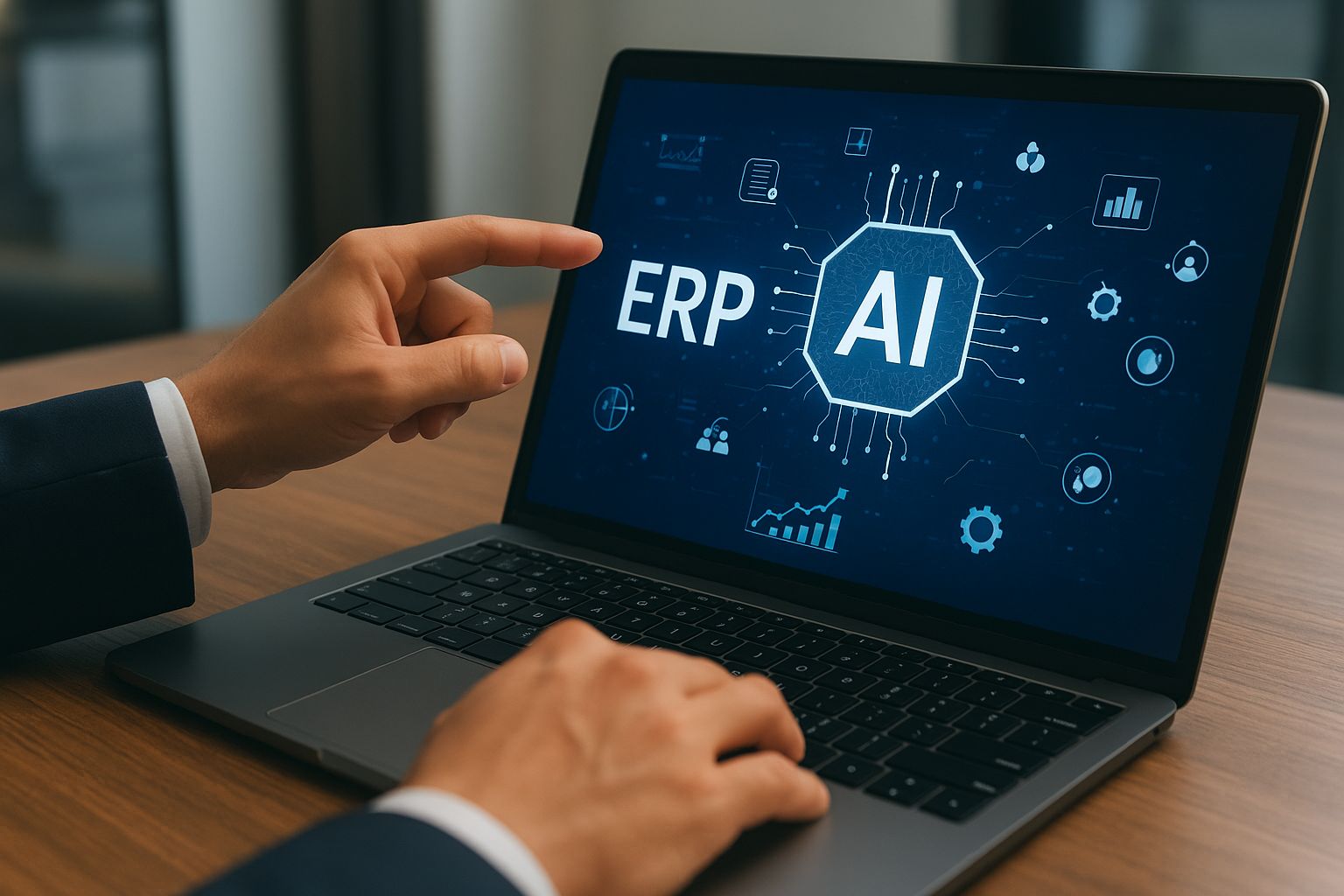
Enterprise Resource Planning (ERP) systems have historically been at the core of business operations, offering a digital backbone that supports functions ranging from accounting to supply chain management. The current trend, however, is witnessing a dynamic shift towards AI-driven ERP systems, marking a new chapter in how businesses manage their processes.
AI integration into ERP systems is not merely a technological upgrade but a comprehensive reimagining of business operations. These systems leverage artificial intelligence to significantly enhance predictive analytics, providing businesses a strategic advantage in anticipating market trends and customer needs. This predictive capability allows organizations to adjust strategies proactively and stay ahead of competitors.
Moreover, AI-driven ERPs foster a level of automation that reduces manual inputs. This automation translates to enhanced efficiency and reduced error rates by automating routine tasks, allowing human resources to focus on more strategic priorities. For example, a leading manufacturing firm recently integrated AI into its ERP and reported a 30% increase in operational efficiency as routine order processing became automated.
Another significant advantage is improved decision-making. By utilizing machine learning algorithms, these systems digest vast amounts of data to highlight trends and insights that would otherwise remain obscured. This capability has proven invaluable in sectors such as retail, where AI-powered ERP systems enable precision forecasting of inventory requirements, subsequently reducing hold costs and increasing turnover rates.
The adaptability of AI in responding to real-time data provides businesses with a nuanced understanding of their operations, further diversifying how ERP systems are used across different industries. Companies in the healthcare sector, for instance, utilize AI-driven ERPs to predict patient outcomes and optimize resource allocation, thereby delivering improved care at lower costs.
As businesses continue to face an unpredictable market landscape, the evolution towards more sophisticated ERP systems is inevitable. Organizations that adopt AI-driven ERP solutions not only streamline their operations but also increase their capacity to innovate, positioning themselves more resiliently in a competitive environment.
Integrating AI into ERP systems is an investment in future-proofing business operations, fostering a culture of continuous improvement and adaptation. Such technological enhancements ensure that ERP systems remain pivotal in driving the digital transformation of enterprises globally.

