

The movement towards sustainability and environmentally responsible practices is no longer an elective for businesses; it's becoming imperative. At the heart of this transformation is the adoption of green finance, a subset of finance that prioritizes environmentally friendly practices and investment strategies. As businesses pivot towards green practices, Enterprise Resource Planning (ERP) systems are rising to the occasion, equipping organizations with the necessary tools to navigate this new frontier.
Emerging as a buzzword, green finance encapsulates investment approaches concentrated on projects or activities that promote carbon reduction, energy efficiency, and broader sustainability. This financial strategy not only encourages the preservation of natural resources but also serves as an opportunity for companies to enhance their brand reputation, mitigate risks from climate change, and potentially unlock financial incentives linked to sustainable business models.
ERP systems, traditionally known for optimizing business processes, inventory management, and financial operations, are steadily evolving to support these green finance initiatives. Modern ERP platforms are integrating sustainability metrics, enabling organizations to track their environmental impact meticulously. With enhanced analytical capabilities, these systems can now assist businesses in reducing waste, managing sustainable supply chains, and reporting on ESG (Environmental, Social, and Governance) criteria with accuracy.
Several companies have already embarked on this journey by integrating their ERP systems with green initiatives. A notable example is the multinational corporation, Siemens, renowned for embedding sustainable initiatives within its operations. Through leveraging advanced ERP systems, Siemens has not only optimized its energy consumption but also achieved substantial reductions in carbon emissions, setting a precedent for industries worldwide.
For CFOs and other decision-makers, understanding the financial implications of sustainability is crucial. Efficient ERP systems provide real-time data analytics and reporting, equipping companies with insights necessary for informed decision-making regarding sustainable investments. Moreover, with regulatory bodies increasing adherence to green policies, these systems can assist businesses in staying compliant, safeguarding against potential fines and reputation damage.
In today's rapidly changing economic landscape, ERP systems stand at a pivotal crossroads with green finance. By facilitating data-driven insights, promoting efficient resource management, and aligning with corporate sustainability goals, these systems are proving indispensable in a company's journey towards sustainability. The intersection of ERP and green finance is not just a trend—it's a critical strategy for future-proofing businesses in an era increasingly dominated by environmental consciousness.
Estimated reading time: 2 minutes, 0 seconds
Embracing Green Finance: A New Frontier for ERP Systems Featured
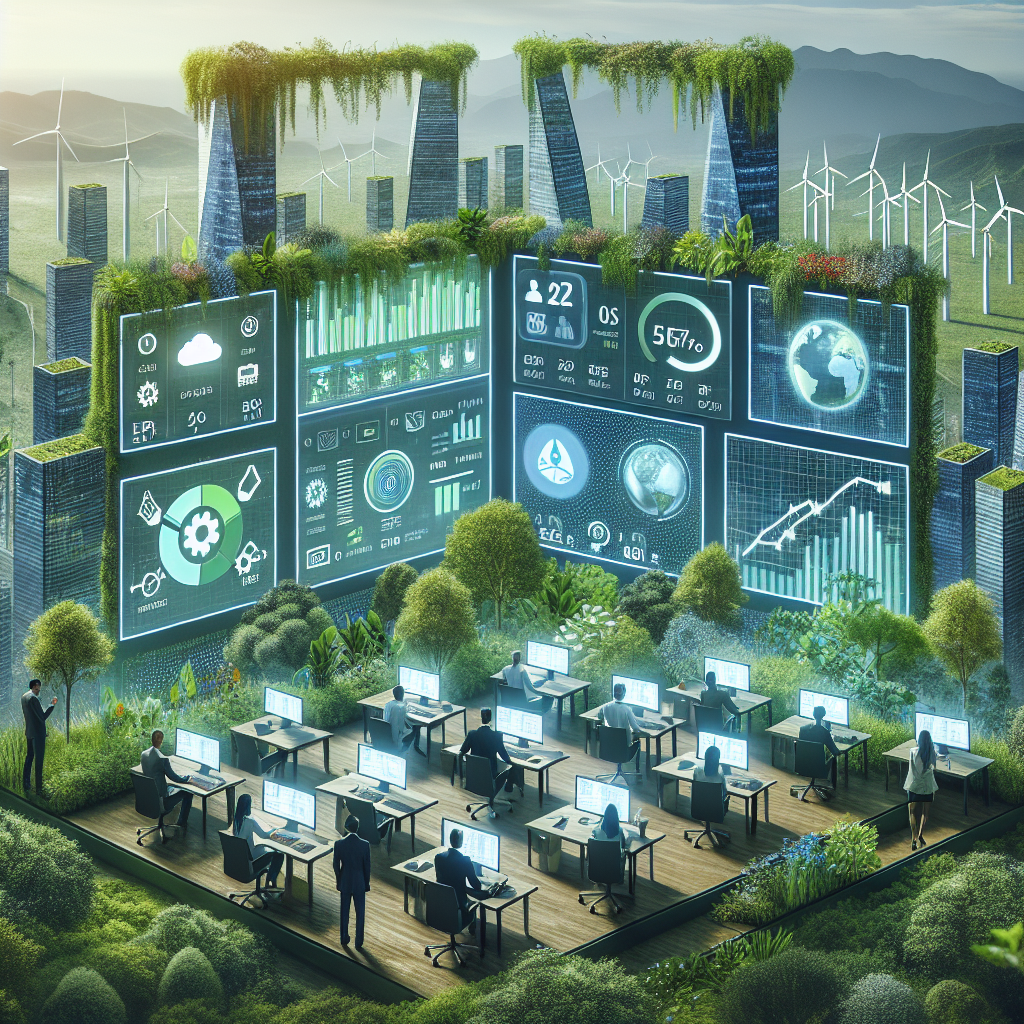 Explore how ERP systems are evolving to embrace green finance, aiding businesses in the shift towards sustainable practices by integrating environmental performance metrics.
Latest from ERP Global Insights
- Unveiling the Latest ERP Innovations: A Leap Towards Automation
- Revolutionizing Accounting with New ERP Solutions
- Cloud ERP Solutions: Transforming Business Operations Amidst Market Dynamics
- ERP System Integration: Strategies for Seamless Implementation
- The Shift Towards Cloud-Based ERP Solutions Continues
Most Read
-

-
May 19 2021
-
Written by BobWScott
 Just what kind of year has it been for the…
-
-

-
May 22 2017
-
Written by mark
The last year has been one of change—the cloud has…
-
-
-
May 22 2017
-
Written by BobWScott
The last year has been one of change—the cloud has…
-
-
-
May 25 2016
-
Written by mark
Annual Report: 2016 BSI Top 100 VARs The web has…
-