






Enterprise Resource Planning (ERP) systems have long been the backbone of business operations, streamlining processes, and improving efficiency across departments. Recently, ERP systems have taken a significant leap forward with the integration of real-time automation technologies. This evolution is not just enhancing operational efficiency but fundamentally transforming business models.
One of the key trends in ERP automation is the ability to process and analyze data in real-time. This advancement allows organizations to monitor their operations continuously and make informed decisions without delay. By integrating artificial intelligence and machine learning algorithms, modern ERP systems can predict demand fluctuations, manage inventory with precision, and even automate routine tasks that previously required human intervention.
A notable example of ERP automation in action can be seen in the manufacturing sector. Companies are now employing smart sensors and IoT devices that feed data directly into the ERP system. These systems can then analyze the data and adjust manufacturing schedules, manage supply chains, and even perform predictive maintenance on machinery. This has led to reduced downtime, increased productivity, and significant cost savings.
However, the real power of ERP automation lies in its ability to personalize business processes. Businesses can now tailor their operations to meet specific customer needs and market demands, thereby enhancing customer satisfaction and loyalty. Personalized dashboards and reports provide employees at all levels with the insights they need to optimize their daily tasks and strategic goals.
While the advantages of real-time ERP automation are significant, organizations must also be mindful of the challenges involved. Data security and privacy concerns are paramount, as sensitive business data is often stored in the cloud. Companies must invest in robust cybersecurity measures to protect their data and ensure compliance with industry regulations.
The future of ERP automation looks promising, with continuous advancements in artificial intelligence and machine learning paving the way for even more sophisticated systems. As companies continue to adopt these technologies, they are likely to see a competitive advantage in the form of enhanced agility and responsiveness to market changes.
Estimated reading time: 1 minute, 45 seconds
ERP Automation: Transforming Business Operations in Real Time Featured
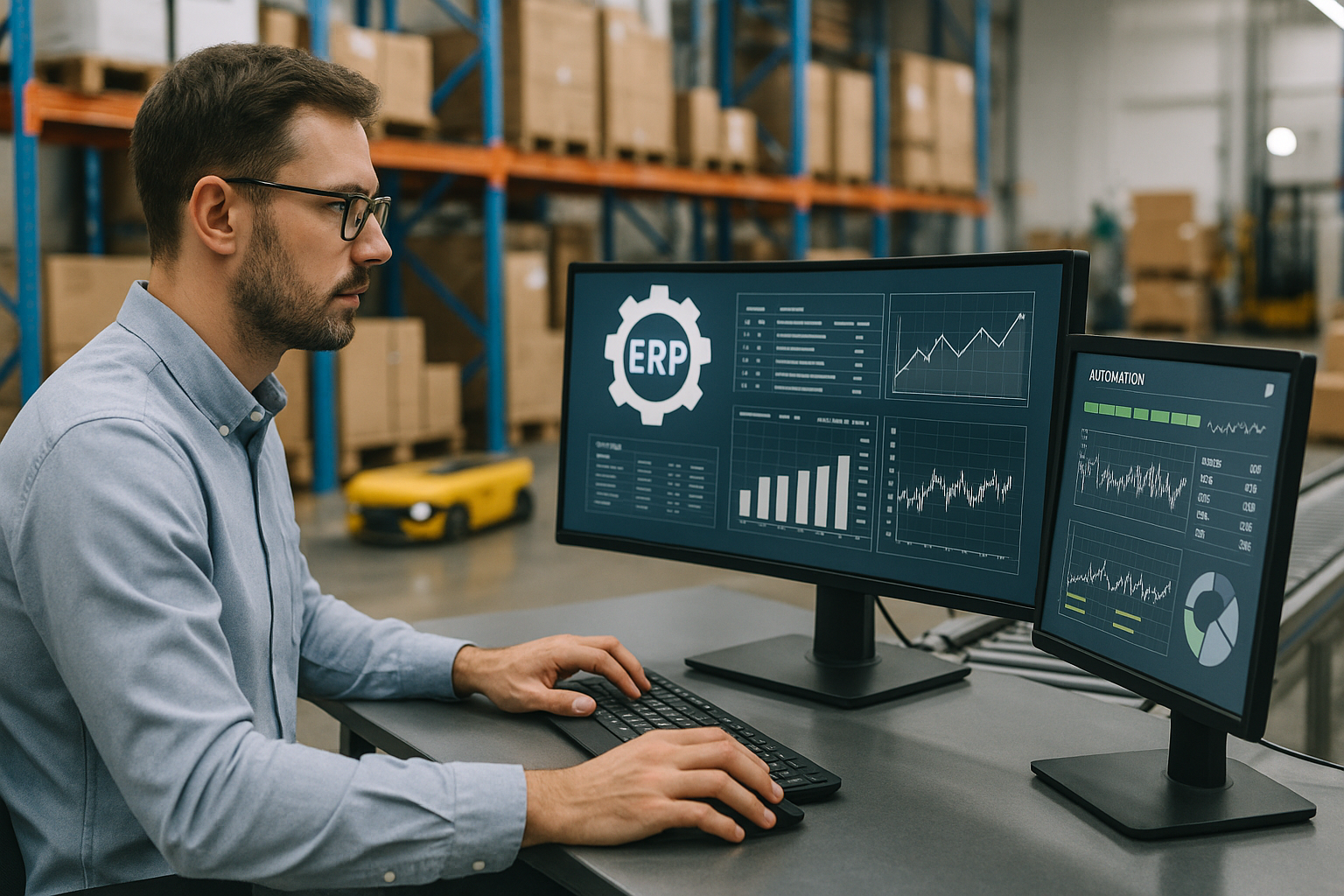 Explore how ERP automation is revolutionizing business operations with real-time capabilities, enhancing efficiency, and enabling personalized business processes.
Latest from ERP Global Insights
- Revolutionizing Productivity: New ERP Solutions for 2023
- Revolutionizing Inventory Management: The Rise of AI-Driven ERP Solutions
- The Growing Embrace of Cloud-Based ERP Systems in 2023
- The Need for Agile ERP Systems in Today's Fast-Paced Business Environment
- Rising Demand for ERP Solutions as Businesses Seek Efficiency
Most Read
-

-
Oct 30 2018
-
Written by Craig Gehrig
 Many large companies have already adopted some form of automation…
-
-

-
Dec 16 2019
-
Written by News
Artificial intelligence will be used to complete an unfinished symphony,…
-
-
-
Mar 17 2020
-
Written by Deborah Huyett
“What do you think you’re doing, Dave?” This iconic line…
-
-
-
Jan 08 2019
-
Written by Robert Agar
Industrial robots are not a new phenomena. They have been…
-
