Amidst the backdrop of global economic turbulence, inflation is once again taking center stage in boardrooms across the globe. Recent trends have shown inflationary pressures impacting nearly every facet of business operations, with ERP systems being no exception.
The primary role of an ERP is to streamline processes and provide a 360-degree view of operations, yet with inflation affecting costs unpredictably, there is a renewed focus on leveraging ERPs for dynamic financial planning and cost management. In the past three days, industry experts have delved deep into how businesses are integrating real-time inflation data into their ERP systems to better forecast and manage costs.
With supply chains being particularly vulnerable, ERP systems are now tasked with not just tracking, but also anticipating, delays and cost spikes. Utilizing advanced analytics and AI modules within ERP platforms, businesses are bringing agility into their logistics operations and being proactive rather than reactive. An example of this is a renowned retail giant, which recently implemented a feature to predict logistic costs based on price indices, resulting in a 15% reduction in unexpected expenses.
Moreover, as commodity prices soar, industries ranging from manufacturing to retail are keenly observing how ERP systems can aid in price volatility management. Several firms are integrating predictive analytics tools within their ERPs to simulate potential impact scenarios based on fluctuating material costs. This not only aids in financial forecasting but also helps in making informed procurement decisions.
It's clear that the role of ERP systems is evolving from being mere operational backbones to becoming crucial players in strategic decision-making. By embedding inflation-driven insights into their core, businesses can achieve resilient operations that withstand these economic pressures.
Ultimately, in these uncertain times, the need for an adaptive ERP system has never been more paramount. As inflation continues its upward trajectory, businesses must ensure their technological infrastructure is robust enough to handle the ripple effects, turning challenges into opportunities.
Navigating the Rocky Terrain: Impact of Inflation Trends on ERP Systems Featured
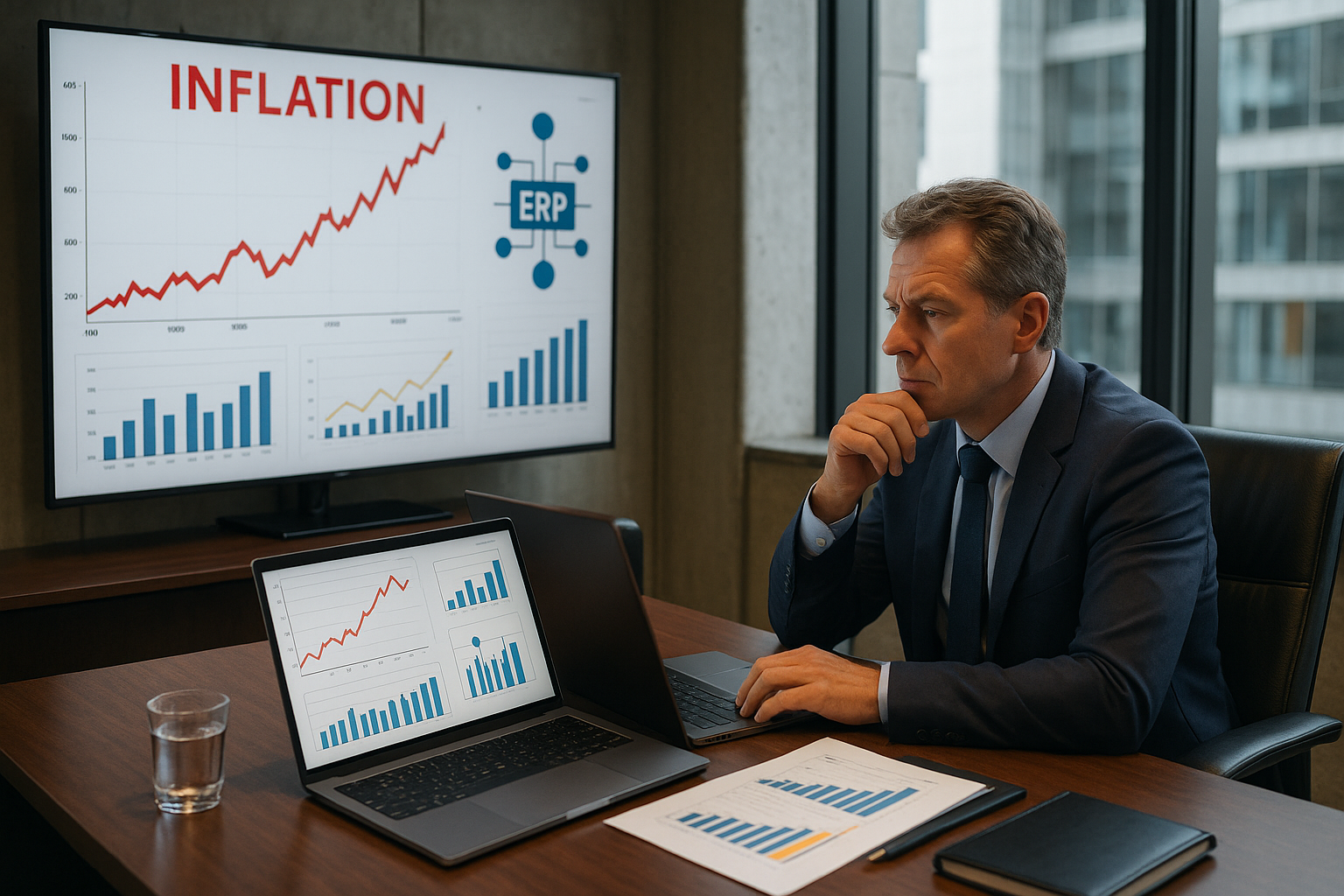 Exploring the significant impact of inflation trends on ERP systems. Analyzing how businesses are leveraging ERP for better cost management and financial planning amidst economic challenges.

Latest from ERP Global Insights
- Cloud ERP Solutions: Transforming Business Operations Amidst Market Dynamics
- ERP System Integration: Strategies for Seamless Implementation
- The Shift Towards Cloud-Based ERP Solutions Continues
- The Rise of Smart ERP Systems in Modern Enterprises
- Adapting to the Shifting ERP Landscape: Recent Innovations and Challenges